Why the Bible Matters: Building a Biblical Worldview from 2 Timothy 3
Rooted in Scripture
June 7, 2026 | Pastor Sean Sloan
More from RootedWatch the full livestream on YouTubeSubscribe on YouTube
Why should the Bible matter so much in your everyday life? Because what you believe to be true shapes your reality, and the Bible is the one source that is God's own breathed-out Word. When you know what Scripture actually is, reading it stops being a chore. It becomes the ground you build your whole life on.
Key takeaways
- What you believe to be real shapes your emotions, choices, and relationships, whether or not it is true.
- A biblical worldview is your total picture of the world seen from the standpoint of Scripture, and it begins with God.
- All Scripture is God-breathed, which is why it has power to teach, warn, correct, and lead you to salvation (2 Timothy 3:15 to 16).
- The habits are simple: read it, memorize it, and meditate on it. They last once you see what the Bible really is.
Why does what you believe matter so much?
What you believe to be real shapes how you live, even when it isn't true, so two people can walk into the same room and experience it completely differently. A fear that is real to you can change your thoughts, your body, and your behavior.
The same is true of the words spoken over you. You're not good enough. You're from the wrong family. God could never forgive that. Pastor Sean Sloan noted that the most powerful words are often the ones we keep rehearsing to ourselves. Those words can limit your life and keep you bound, but Jesus offers another way.
If you hold to my teaching, you are really my disciples. Then you will know the truth, and the truth will set you free.
John 8:31 to 32
A disciple is a student, or better, an apprentice. A disciple studies, does, and then teaches others the way of the master. Here's the hard part: whoever you trust to tell you the truth is the person whose disciple you are steadily becoming. That could be a news channel, a political group, a playlist, or a social circle.
What is a biblical worldview?
A worldview is your total conception of the world from a given standpoint. These are the deep beliefs you rarely question. A biblical worldview sees everything from the standpoint of Scripture: the meaning of life, the nature of God, and the source of truth.
Your worldview forms early in life. Pastor Sean pointed to research showing that most Christians come to faith between ages 4 and 18. That is why God told parents to make His Word part of daily life.
These commandments that I give you today are to be on your hearts. Impress them on your children. Talk about them when you sit at home and when you walk along the road, when you lie down and when you get up.
Deuteronomy 6:6 to 7
Changing deeply held beliefs later in life is harder, but it is possible. The Holy Spirit can tear down strongholds, the controlling mindsets that have bound you. Scripture says you can take every thought captive to Christ.
Can you believe in God and still live as if He doesn't matter?
Yes, and many people do. Pastor Sean called it being a functional atheist. Your mind agrees there's a God, but your schedule, your money, and your conversations say He is irrelevant to most of your life.
He said it as gently as he could: a faith that never touches your goals, career, finances, relationships, or entertainment may be a religion. It is not the Christian faith. For a Christ follower, God is the center, the foundation, and the source of everything.
That's why a biblical worldview starts with one question: is there a God? The answer is either yes or no, and answering "maybe" works like a quiet no. If there is a God, there is real truth, real purpose, and a real reckoning. You can submit to Him or rebel against Him, but you can't simply ignore Him.
What does it mean that Scripture is God-breathed?
It means the Bible carries the very breath of God. We can only know God because He chose to make Himself known, and He has revealed Himself through His Word.
All scripture is given by inspiration of God, and is profitable for doctrine, for reproof, for correction, for instruction in righteousness.
2 Timothy 3:16 (KJV)
For example, think about how you form words. Air from your lungs passes across your vocal cords. In the same way, the Spirit of God breathed out these words in human language. That's why Scripture is useful:
- Doctrine tells you who God is and what He has done.
- Reproof shows you, through others' stories, where people missed the mark.
- Correction works like a mirror. It shows where you're out of line with God, and turning to align with Him is repentance.
- Instruction shows you what a righteous life looks like.
Paul reminded Timothy where his own faith came from. He told him to continue in what he had learned, because he knew the people who taught him (2 Timothy 3:14). Then Paul pointed to the source.
From infancy you have known the Holy Scriptures, which are able to make you wise for salvation through faith in Christ Jesus.
2 Timothy 3:15
How do you read the Bible without twisting it?
Start with what the passage meant to its original readers. As Pastor Sean put it, the Bible can never mean what it never meant. When you know what it meant then, you'll know what it means for you today.
Read all of it, too, including the Old Testament. The Scripture Paul called God-breathed was the Old Testament. Without the Old Testament, the cross is meaningless. Without the cross, the Old Testament is hopeless.
Why do you need the Word inside you, not just on your shelf?
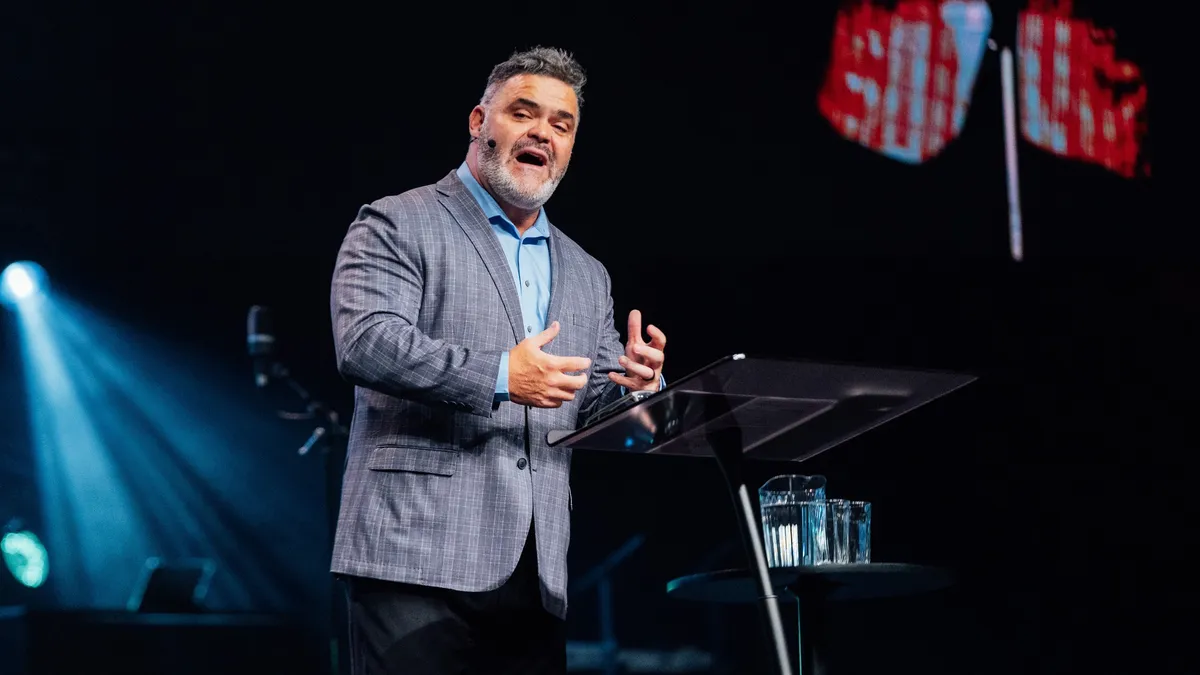
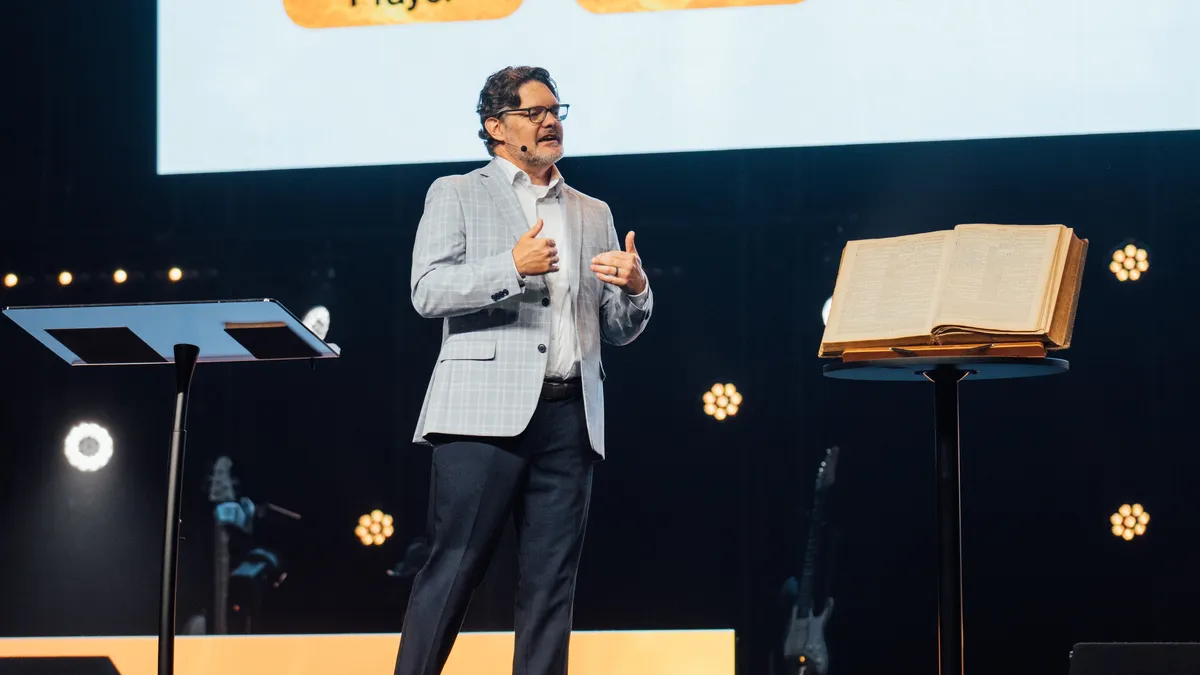
Because the Word on your coffee table won't change your life. The Word you have received, believed, and can recall will. For example, Pastor Sean held up a huge family Bible, the kind that sat on a living room table. You don't need a Bible that takes up more space in your house. You need one that takes up more residence in your heart.
Jesus modeled this. When Satan tempted Him in the wilderness, Jesus answered each time with Scripture from Deuteronomy. It wasn't sitting on a shelf; it was inside Him, and it became His weapon in the battle.
That person is like a tree planted by streams of water, which yields its fruit in season and whose leaf does not wither, whatever they do prospers.
Psalm 1:3
Three habits to sink your roots
- Read it. Pick one book of the Bible and read a chapter a day. Ask what it meant to the first readers before asking what it means to you.
- Memorize it. Choose one verse this week, maybe John 8:32, and write it where you'll see it.
- Meditate on it. Rehearse that verse in your mind through the day, especially when old lies start replaying.
- Check your voices. List the sources you trust most for truth. Ask whose disciple each one is making you.
Pray
Father, thank You for speaking. Your words are spirit and life. Forgive me for the places where I've believed in You but lived as if You didn't matter. Tear down the lies I've rehearsed about myself. Give me a hunger for Your Word, and let it take up residence in my heart. In Jesus' name, amen.
Common questions
What is a biblical worldview?
A biblical worldview is your total picture of the world seen from the standpoint of Scripture. It shapes what you believe about God, truth, the meaning of life, and who you are. It begins with the conviction that God exists and has spoken in the Bible.
What does "God-breathed" mean in 2 Timothy 3:16?
It means Scripture comes from the very breath of God, much like your words come from the breath in your lungs. The King James Version says it is "given by inspiration of God." So the Bible carries God's authority. That is why it has authority and the power to transform your life.
What is a functional atheist?
A functional atheist believes God exists but lives as if He doesn't matter. Their schedule, finances, and everyday decisions leave God out. Pastor Sean Sloan describes this as religion without the Christian faith.
How can I start reading the Bible regularly?
Keep it simple: read it, memorize it, and meditate on it through the day. Start with one chapter and one memorized verse at a time. The habit lasts when you remember you're holding a message from the God who made you.
Your next step
Want to grow in the Word with others? Find a group, or take your next step at Calvary.