Is It Okay to Doubt? What Jesus Did for Thomas in John 20
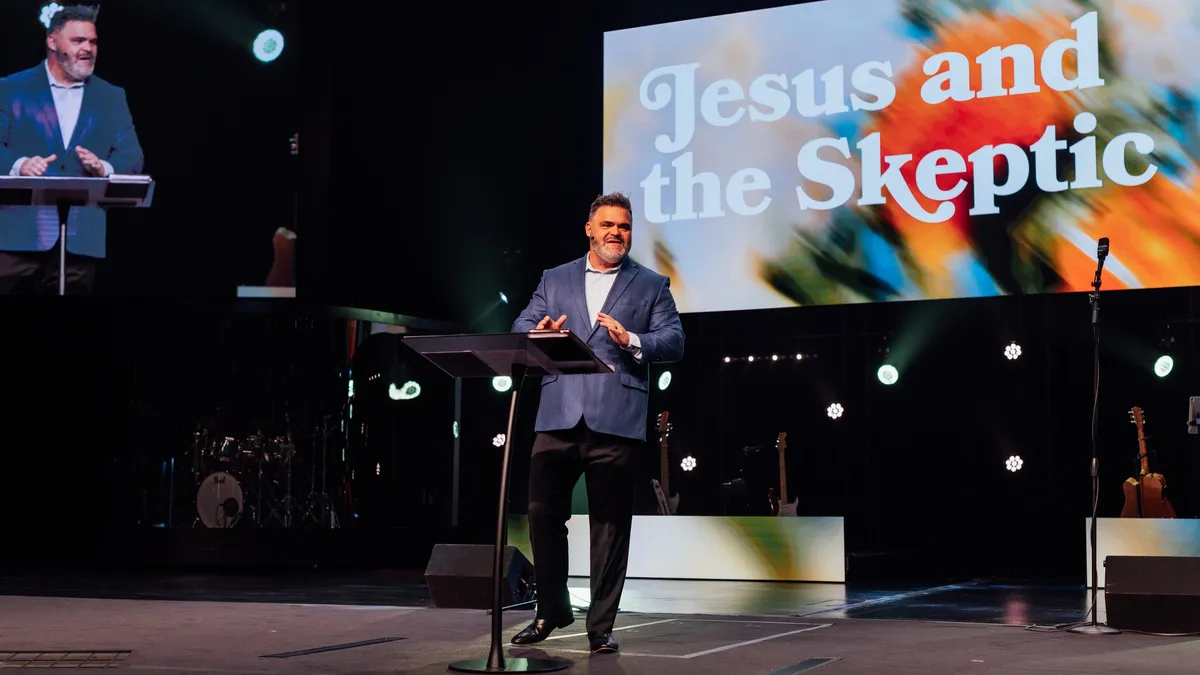
Jesus and the Skeptic
March 22, 2026 | Pastor Marty Sloan
More from Jesus and...Watch the full livestream on YouTubeSubscribe on YouTube
Maybe you believe in Jesus but carry questions you've never said out loud. Is that a problem? Not if you bring those questions to the right place. Pastor Marty Sloan's big idea was simple: honest doubt can lead you to deeper faith. Jesus met Thomas in his doubt, and He will meet you in yours.
Key takeaways
- Honest doubt is an invitation to dig deeper into who God is, as long as you don't leave it unresolved.
- Your skepticism often lives in the gap between what you hear in God's Word and what you actually do.
- In John 20, Jesus came back for Thomas and gave him the exact evidence he asked for.
- Everything in the Christian faith rests on the resurrection, and Thomas answered it with "My Lord and my God."
Is it wrong for a Christian to have doubts?
No. Doubt and skepticism can be an invitation to a deeper discovery of who God is. Pastor Marty encouraged everyone to inspect their faith, because your eternal life depends on the truth of the gospel. "I was raised this way" isn't enough. You need to know what you believe and why.
He was also confident in the outcome. "I have faith in the strength of this book," he said. "It's not going to fail you." So question it, test it, and push against it. God's Word is true.
Faith is belief that's processing. It is trusting, and it is stepping. Faith is bringing your questions to the right Person. You don't have to act sure about things you're unsure about. You can say, "God, I don't understand this," and then go find out what His Word says.
Where does doubt show up in your life?
Doubt often hides in the space between hearing and doing. Skepticism is, in Pastor Marty's definition, the gap between what you've been taught and the action that should follow.
For example, you've heard "love your enemies" and "forgive those who persecute you." If you struggle to do those things, that gap is where your skepticism lives. If you truly believed it to the core, you would do it.
Consider his money illustration. If he could guarantee that $100 would become $1,000 by tonight, you'd hand it over in a heartbeat. But you've heard offers like that before, so you hesitate. We do the same thing with God's promises. We live surrounded by scams and fakes, so even the truth gets filed under "I'll think about it."
Why does the resurrection matter so much?
Everything in the Christian faith rests on it. Paul says so directly.
For what I received I passed on to you as of first importance: that Christ died for our sins according to the Scriptures, that he was buried, that he was raised on the third day according to the Scriptures.
1 Corinthians 15:3 to 4
And if Christ has not been raised, your faith is futile; you are still in your sins.
1 Corinthians 15:17
Pastor Marty put it this way: if the resurrection isn't true, nothing matters, and if it is true, everything matters. He offered a short list of reasons he believes it happened.
- Eyewitnesses. Jesus appeared to Peter, the Twelve, and more than 500 people at once, many still living when Paul wrote.
- Officials of the time. The government officials of that day are part of the record.
- Changed disciples. Before the resurrection they were hiding (John 20:19) and denying (Luke 22:57). After it they preached publicly (Acts 2:14) and rejoiced under persecution (Acts 5:41). You don't die for a lie.
- Changed lives. Pastor Marty counts himself as one of them.
- Social impact. The faith gave rise to orphanages and hospitals and transformed the Roman world.
- James. Jesus' own brother came to call Him Lord. Pastor Marty joked that anyone with a brother knows how unlikely that is.
What really happened with Doubting Thomas?
Jesus came back for him. Pastor Marty preferred to call Thomas a skeptic: someone who wants evidence before accepting a claim as true. Thomas wasn't rebellious or mocking. After a brutal few days, he was saying, in effect, don't make me hope again unless it's true. Thomas wasn't in the room the first time Jesus appeared. When the others told him, he said he wouldn't believe unless he saw the nail marks and touched Jesus' side. A week later, Jesus came through locked doors and spoke to Thomas first.
Then he said to Thomas, "Put your finger here; see my hands. Reach out your hand and put it into my side. Stop doubting and believe." Thomas said to him, "My Lord and my God!" Then Jesus told him, "Because you have seen me, you have believed; blessed are those who have not seen and yet have believed."
John 20:27 to 29
Jesus comes to the skeptic. He repeated Thomas's private words back to him, words spoken when Jesus wasn't physically there. Jesus is not afraid of your questions. You have never prayed a prayer God didn't hear or had a doubt He doesn't understand.
Thomas's answer holds two truths. "My Lord" is full surrender to Jesus' daily authority. "My God" recognizes Him as the eternal Creator of all things. Pastor Marty pointed out what came next. Thomas went on to carry the gospel east, as far as India.
What should you do with your questions?
Don't leave them unresolved. Unresolved questions turn into hope deferred. Hope deferred is hope that keeps getting postponed, and Proverbs 13:12 says it makes the heart sick. Left alone, doubt can harden into refusing to believe. Unbelief walks away from God. Skepticism keeps searching for Him.
Pastor Marty was clear about his own role: "I'm not looking for you to agree with me. I'm looking for you to align with the word of God." When he opens his mouth, you should open your Bible. To keep investigating, he recommended Evidence That Demands a Verdict by Josh McDowell, The Reason for God by Tim Keller, and The Case for the Resurrection of Jesus by Gary Habermas.
Questions to ask when you doubt
- Where am I hearing God's Word but not doing it? Name one area.
- What does Scripture actually say about it? Read the passage for yourself.
- What does the Spirit say as I pray about it?
- What does my church community say? Ask a pastor or a group leader.
- Who is one person I can invite to church, so they can find answers too?
Pray
Jesus, You heard Thomas, and You hear me. I believe, but I have questions. Help me bring them to You instead of hiding them. Lead me into Your Word and show me where I'm hearing without doing. Turn my doubts into deeper faith, until I can say with Thomas, "My Lord and my God." Amen.
Talk about it
- Are you honest about your doubts in your walk with Christ?
- Are you searching out your doubts for truth, or just ignoring them?
- Jesus repeated Thomas's private words back to him in John 20:27. What would you want to say to Jesus if you knew He had already heard it?
- Are you inviting others to follow Jesus even as you keep searching Him out?
Common questions
Is it a sin to doubt God?
Having honest questions is not the same as rejecting God. Jesus met Thomas in his doubt and gave him what he needed to believe. The danger is leaving doubts unresolved instead of bringing them to Scripture, prayer, and your church.
Why is Thomas called Doubting Thomas?
In John 20:25, Thomas said he would not believe Jesus had risen unless he saw and touched the nail marks. A week later Jesus appeared, invited him to touch His wounds, and Thomas declared, "My Lord and my God!"
What evidence is there for the resurrection of Jesus?
Pastor Marty Sloan pointed to the many eyewitnesses in 1 Corinthians 15, disciples who went from hiding to dying for their faith, changed lives, and Jesus' brother James becoming a believer.
How can doubt lead to stronger faith?
When you push into your questions with Scripture, prayer, and wise counsel, you discover the reasons behind what you believe. That kind of tested faith holds up under pressure.
Your next step
Move from skeptic to messenger: invite someone to church with you this weekend. Have a question about faith? Plan a visit and talk with a pastor after the service, or join a group where questions are welcome.