Keep Christ First: What Philippians 1 Teaches About Purpose in Hard Seasons
Keep Christ First
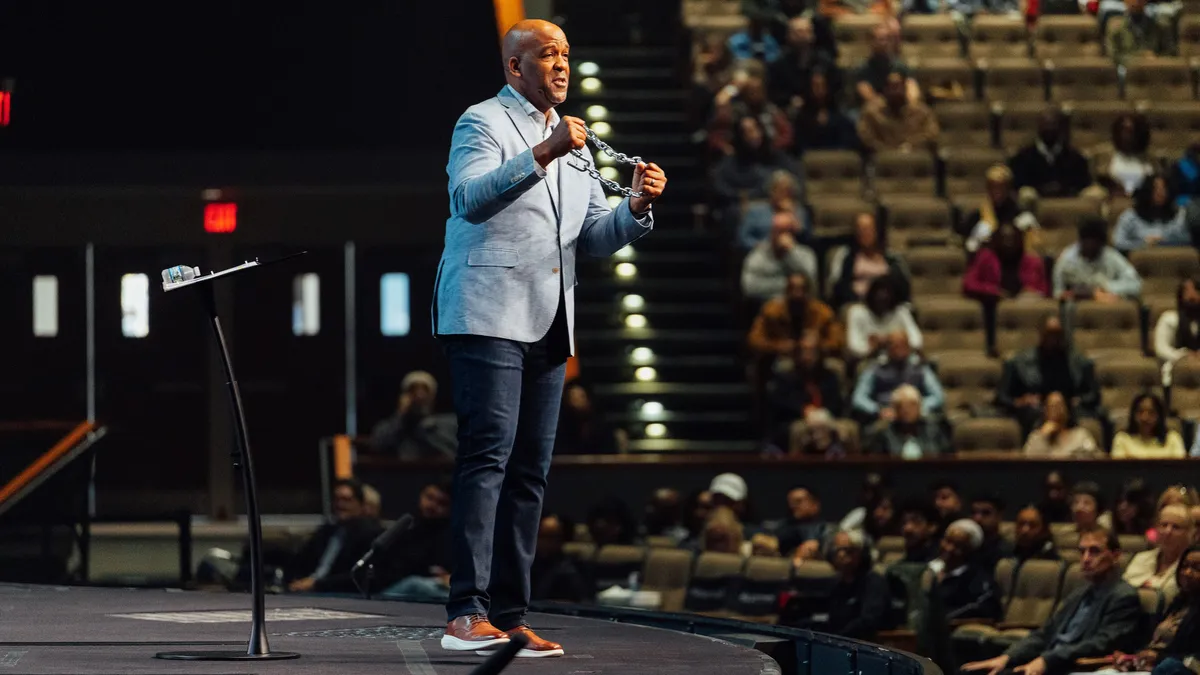
November 8, 2026 | Pastor Jason McElwee
More from A JoyFULL LifeWatch the full livestream on YouTubeSubscribe on YouTube
How do you keep Christ first when life takes a turn you never planned? Paul wrote Philippians 1 in chains, and instead of staring at what had gone wrong, he looked for what God was doing through it. In Philippians 1:12 to 27, Pastor Jason McElwee shows three things Paul recognized: what God can do within a hard situation, the difference between your preferences and your purpose, and what is truly worthy of your life.
Key takeaways
- Your route can change without your destination changing. God told Paul he would testify in Rome, but not how he would get there.
- Faith doesn't call a bad situation good. It trusts that God can still work in a bad situation (Romans 8:28).
- Rome could put chains on Paul, but it could not put chains on the gospel.
- You can lose what you prefer without losing what God has called you to do.
- Whatever happens, live in a way that is worthy of the gospel, because you know who you belong to.
Now I want you to know, brothers and sisters, that what has happened to me has actually served to advance the gospel. As a result, it has become clear throughout the whole palace guard and to everyone else that I am in chains for Christ. And because of my chains, most of the brothers and sisters have become confident in the Lord and dare all the more to proclaim the gospel without fear.
Philippians 1:12 to 14
This is week two of A JoyFULL Life, Calvary Church of Naperville's series in Philippians. Last week Pastor Marty Sloan opened the letter with three things to remember: the people beside you, the work God has begun in you, and the story He is still writing. If you missed it, read Remember Your Joy.
What do you do when life reroutes you?
Pastor Jason started with something every Chicagoland driver knows: the GPS says "recalculating," and a 20 minute drive becomes an hour. Life does that too. A job changes, a diagnosis comes, a plan falls apart. "The routes can be changed," he said, "but the destination remains the same."
The following night the Lord stood near Paul and said, "Take courage! As you have testified about me in Jerusalem, so you must also testify in Rome."
Acts 23:11
Jesus told Paul where he was going, but not about the shipwreck, the beatings, or the years under guard. Paul reached Rome as a prisoner. "Take courage," Pastor Jason said. "God's going to get you to where you're going."
1. Recognize what God can do within a hard situation
God may not remove the situation, but He can be working in it. With their founding pastor in chains, the Philippians likely assumed the mission had stalled. What looked like a setback had "actually served to advance the gospel." Paul wasn't calling prison good. "Faith doesn't mean calling a bad situation good," Pastor Jason said. "Faith means trusting that God can still work in a bad situation."
And we know that in all things God works for the good of those who love him, who have been called according to his purpose.
Romans 8:28
Paul doesn't say all things are good. He says God works in all things. Joseph, sold into slavery by his brothers, could finally tell them, "You intended to harm me, but God intended it for good" (Genesis 50:20). Pastor Jason was honest that this is no promise of an easy road. "Sometimes the chains don't break," he said.
Rome could not put chains on the gospel
Pastor Jason imagined a guard asking the new prisoner what he was in for, then hearing for an eight hour shift about Damascus, the shipwreck, and the miracles. Scripture doesn't say every guard believed, but the letter ends with greetings from believers in "Caesar's household" (Philippians 4:22). "Rome could put chains on Paul," Pastor Jason said, "but Rome could not put chains on the gospel."
Holding up a real chain, he named the ones we carry: illness, job loss, grief, anxiety, depression, addiction, a temper. Some call for a doctor, a counselor, or a recovery group. "That's not a lack of faith," he said. "That's wisdom and that's maturity." His notes add that this message is never a reason to stay in an unsafe or abusive situation. Calvary's care team can connect you with counseling and support groups like GriefShare and Celebrate Recovery.
Courage is contagious
Verse 14 says the church grew bolder "because of my chains." Sometimes we are so focused on what we cannot do that we miss who is in front of us: the nurse, the coworker, the neighbor watching how you handle hardship. "Your faithfulness in hard seasons," he said, "may be the courage that somebody else needs to see."
2. Recognize the difference between your preferences and your purpose
We all have preferences: iPhone or Android, black coffee or matcha, the thermostat at 68 or 74. They go deeper too: where we work, how people treat us, how we expect life to unfold. "Preferences are not wrong," Pastor Jason said. But when they matter more than God's purpose, we lose sight of what matters most. "You can lose what you prefer without losing what you're called to do."
But what does it matter? The important thing is that in every way, whether from false motives or true, Christ is preached. And because of this I rejoice.
Philippians 1:18
Some were preaching Christ out of envy, hoping to stir up trouble for Paul in prison (1:15 to 17). His reputation simply mattered less than Jesus being proclaimed. Pastor Jason writes the question this way: "Am I more committed to getting what I want or accomplishing what God has called me to do?"
Paul's deepest hope wasn't release. It was that Christ would be exalted in his body, "whether by life or by death" (1:20). Then: "For to me, to live is Christ and to die is gain" (1:21). Pastor Jason asked everyone to fill in the blank. To live is my career, my reputation, people's approval? Then to die is loss. Only Christ makes the sentence work. For more on this verse, read Make Your Life Count.
3. Recognize what is worthy of your life
In verses 22 to 26, Paul is torn: being with Christ would be better by far, but staying means fruitful labor "for your progress and joy in the faith." "A life centered on Christ isn't just about what you receive," Pastor Jason said. "It's about how and what you contribute." If God has you here, He still has something for you to do. What is it? "I don't know. Ask God," he said. "My name is Jason, not Jesus."
Instead of "Why am I still here?" ask, "Who is making progress in their faith because I am here?" Pastor Jason told about a man at his new gym who asked what he did. "Motivational speaker," he answered. Then one day he wore a Calvary shirt, and his spotter at the bench press asked, "Are you a pastor?" He racked the weight and said yes, and now he prays for that man.
Whatever happens, conduct yourselves in a manner worthy of the gospel of Christ.
Philippians 1:27
Whatever happens, not only when life is going well. Followers of Jesus are citizens of a different King. "When you know who you belong to," Pastor Jason said, "you know how you're called to live." If Paul could speak up from a prison cell, he said, he could speak up walking around free in Naperville, and so can we. Next time you're at Costco, get your samples, but ask the Lord if there is someone there you can pray for.
The rest of verse 27 calls the church to stand together "with one spirit and one purpose" (NLT): unity without compromising truth, love without abandoning conviction. If you're not part of a community like that yet, find a group where people will stand with you.
What if your chains don't come off?
Pastor Jason went back to the GPS: the voice never stopped guiding you, and the destination never moved. "Prayer may not break the chain," he said, "but prayer will give you strength to endure." His notes say it this way: don't get so focused on what you're chained to that you forget who you're connected to. As he prayed for everyone who raised a hand, he reminded them there is no shame in your chain. You don't have to carry yours alone: share it with our prayer team.
Keep Christ first this week
- Name your chain. Write down the hard situation on your mind, and ask God what He might be doing in it.
- Look up. Pray, "Lord, how can I represent You faithfully in this season, even while I'm praying for it to change?" Then take one step: one conversation, one act of service.
- Fill in the blank. Finish "For to me, to live is..." honestly, and name what needs to change.
Pray
Lord Jesus, You stood near Paul in his chains, and You are near me in mine. Where my route has changed, help me trust that You have not lost track of where You are taking me. Keep me from loving what I prefer more than what You have called me to do. Whatever happens, help me live worthy of the gospel, and give me courage that helps someone else believe. In Jesus' name, amen.
Talk about it
- What "chains" are keeping you from recognizing God's purpose in your circumstances?
- Do your priorities reflect that Christ matters most? What needs to change?
- Does the way I spend my time and treat people reflect the One I say matters most?
- Who is making progress in their faith because I am here?
For further study, Pastor Jason recommends Paul's Letter to the Philippians by Gordon Fee (New International Commentary on the New Testament) and Philippians: Christ, the Source of Joy and Strength by John MacArthur.
Common questions
What does Philippians 1:12 mean?
Paul says his imprisonment, which looked like a setback, had actually served to advance the gospel. He isn't calling prison good. He is saying God was working in a hard situation.
Who was the palace guard in Philippians 1:13?
An elite Roman military force tied to imperial authority. As soldiers took turns guarding Paul, the reason for his chains became known throughout the guard.
Does Romans 8:28 mean everything that happens to me is good?
No. It says God works in all things for the good of those who love Him, not that all things are good. It does not promise every hardship will end the way we want. It promises God is still at work in it.
What does it mean to live worthy of the gospel?
In Philippians 1:27, "conduct yourselves" carries the idea of citizenship. Followers of Jesus belong to a different King, so whatever happens, they live in a way that reflects Him and stand together as one church.
Your next step
This week, ask who is making progress in their faith because you are here, and take one step toward them. If you're near Naperville, come walk through Philippians with us this fall. Plan your visit to Calvary.